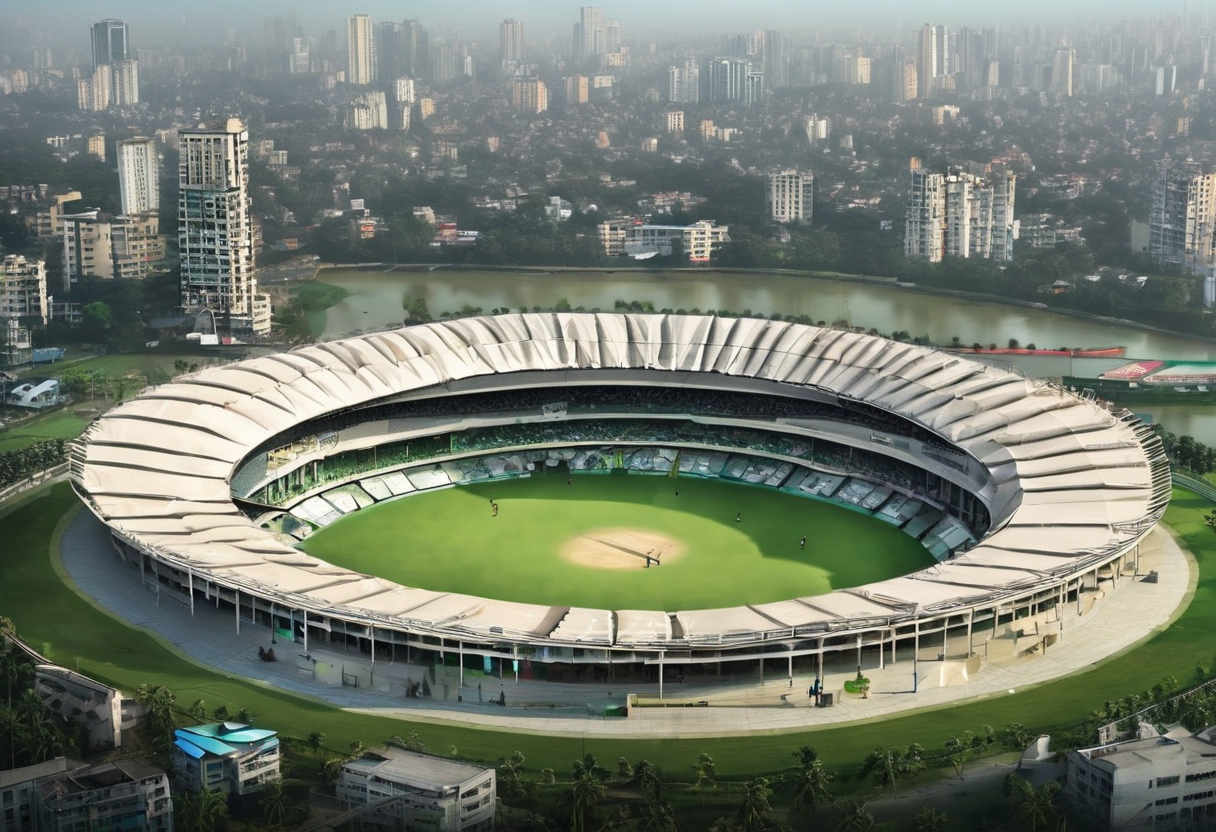
The city of Dhaka, located in the bustling country of Bangladesh, has been home to the sport of cricket for centuries. The first recorded game of cricket in Dhaka took place in the early 1800s, when British colonialists introduced the sport to the locals. From then on, cricket slowly but steadily gained popularity among the residents of Dhaka, and it wasn’t long before the city was known for its love and passion for the game.
As the sport grew in popularity, the need for a dedicated cricket arena in Dhaka became apparent. The first official cricket stadium, Bangabandhu National Stadium, was built in 1954 and became the hub for all cricket matches in Dhaka. However, with the growing demand for cricket in the city, it soon became evident that a bigger and better facility was needed.
In 2006, the Sher-e-Bangla National Cricket Stadium was constructed, with a seating capacity of over 25,000 spectators, making it the largest cricket stadium in Bangladesh. This state-of-the-art facility quickly became the heart of the cricketing world in Dhaka, hosting numerous international matches and tournaments, including the ICC Cricket World Cup in 2011. It has also been the battleground for many iconic cricket moments, with some of the biggest names in the sport setting foot on its hallowed grounds.
Today, cricket remains an integral part of the culture and heritage of Dhaka. The city boasts of several other cricket arenas, including the historic Dhaka University Stadium and the newly built Rajshahi Cricket Stadium. With the constant growth and development of the sport in the city, it is safe to say that the legacy of cricket in Dhaka will continue to thrive for generations to come.